Pistol Duel
- 4.3
- Rating
- 10.00M
- Installs
- Free
- Price

 Analysis by App-foxy
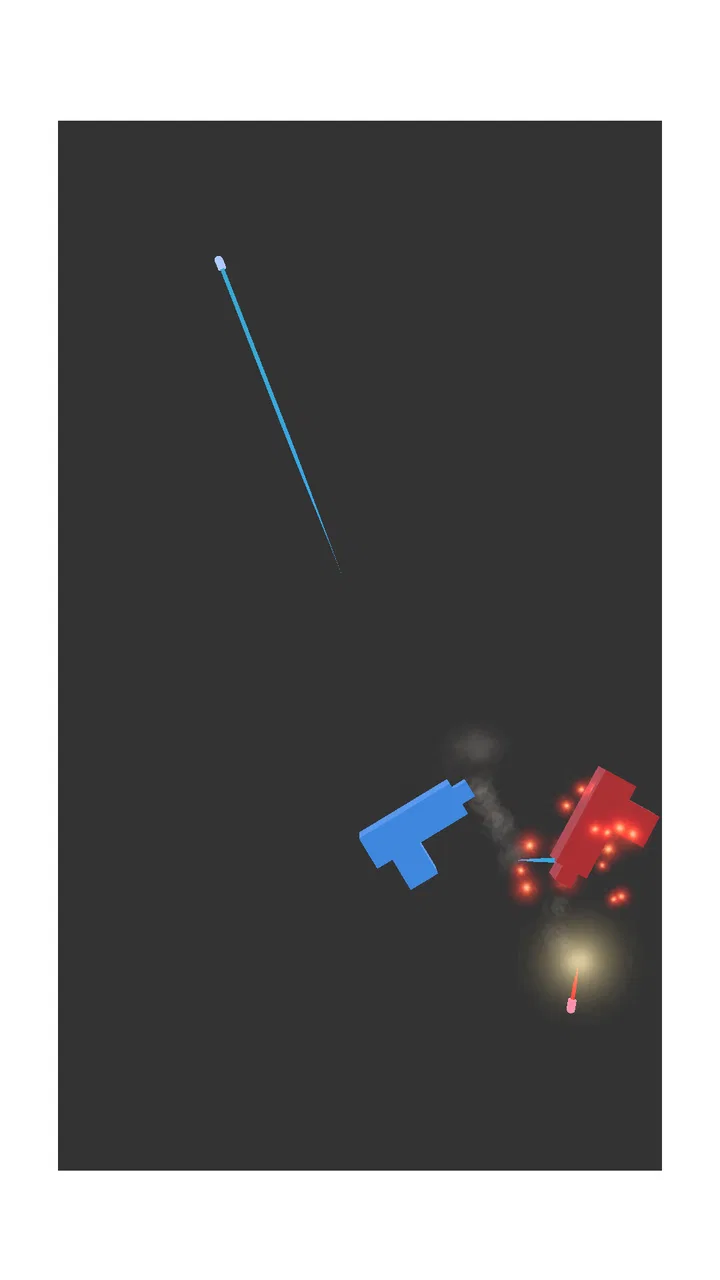
I went into Pistol Duel expecting a quick action game, and that is exactly where it fits best: short bursts of pistol fighting built around recoil. Instead of treating the gun as a perfectly stable tool, the game makes the kickback part of the challenge. Every shot has a consequence, so success depends on timing and control rather than simply tapping as fast as possible.
That central idea gives the game a clear identity. It is not trying to replace a large online shooter, a story-heavy action adventure, or a detailed tactical simulator. It is a compact duel experience from KAYAC Inc., designed for players who want to pick up their phone and immediately work on a simple but demanding action skill. The store summary describes the concept in a few words, but the practical appeal is in learning how to turn recoil from a problem into an advantage.
The game is free, carries a Teen content rating, and belongs to the action category. It also has a 4.5 average from around 11 thousand ratings, with more than 5 million installs. Those figures suggest that the basic idea has reached a substantial audience, but they do not tell you whether its particular rhythm will suit you. My impression is that the right question is not whether it looks large or feature-packed; it is whether you enjoy repeating a focused action pattern until your reactions become more reliable.
You May Also Like

 Blood Strike: 2.5 Anniversary
Blood Strike’s Loadouts Turn Every Drop Into a Tactical Gamble
A close look at Blood Strike’s custom loadouts: how fast access to signature weapons reshapes its battle royale rhythm, rewards preparation, and narrows the gap between fights.

 Pandora - Music & Podcasts
Pandora’s Music Is Easy to Start, but Harder to Recover
Pandora’s strength is its low-effort path from a seed to a station. Its weak spot is how much confidence it asks you to place in connection, setup, and quiet recovery.

 8 Ball Pool
 Is Built on Rivalries, Rematches, and Routine
A close look at the rivalries, rematches, shared routines, and unanswered safety questions that turn a quick pool match into a persistent mobile community.

 Samsung Music
’s Quiet Strength Is Playing What You Already Own
Its reach comes less from spectacle than from dependable access to a personal library. That simplicity is both the app’s strongest retention engine and its ceiling.

 AccuWeather: Weather Radar
AccuWeather Review: A Quick, Clear Forecast for Everyday Decisions
For everyday plans, the best forecast is the one you can understand quickly. AccuWeather makes rain timing, radar, and local conditions easy to act on, with a few trade-offs.

 Hill Climb Racing
Why Hill Climb Racing Still Turns Crashes Into One More Run
A tiny car, a bumpy hill and one more upgrade: Hill Climb Racing keeps resurfacing because its simple chaos makes every near-miss feel personal.
More From Our News Desk
View All News


What to expect when you start
The first thing to understand is that this is a pistol duel, not a broad collection of unrelated combat modes. The recoil-powered weapon is the defining mechanic, and it changes how I approach every encounter. A shot is not just a way to damage an opponent. It also affects the position and timing of the next move, which means careless firing can create its own problem.
That makes the game feel closer to a timing exercise than to a conventional shooting gallery. In a usual mobile shooter, I might hold an aim point, track a target, and rely on a familiar firing pattern. Here, I need to think about what happens immediately after the shot. The best action is often not the fastest one, but the one that leaves me ready for the next exchange.
For a first-time player, this distinction is important because the opening attempts may feel less natural than expected. If you are used to rapid tapping, the recoil can make that habit work against you. I found it more useful to treat each duel as a small sequence: observe the situation, make one deliberate attack, notice the resulting movement, and then adjust. That mindset makes the game easier to read.
The presentation is also best approached with the expectations of a focused mobile game. I would not install it looking for a long campaign, deep character development, or the equipment management found in larger action titles. Its strength is concentration. It gives one unusual weapon idea most of the attention, and that narrow focus is what makes a short session feel distinct.
There is a useful trade-off here. A tightly defined mechanic can be easier to understand than a game filled with menus, upgrades, missions, and statistics. At the same time, players who need constant variety may find the repeated duel structure less satisfying over a longer sitting. I see it as a game to return to in small sessions rather than something I would automatically leave open for an entire evening.
Who will enjoy the core loop
I would recommend it to someone who likes action games with a physical twist. If you enjoy learning how a small input changes the next moment, the recoil system gives you something concrete to practise. It is also a good fit for players who prefer a clear objective over a long tutorial: face the opponent, use the pistol, and improve your handling of the exchange.
It is less suitable for someone looking for a relaxed shooter where aiming and firing feel predictable. It may also disappoint players who want extensive exploration or a large collection of weapons. The appeal comes from making one weapon feel unusual, not from offering an encyclopaedia of combat options.
One practical use case is a short break during a commute or between tasks. I can imagine playing a few duels while waiting for an appointment, then closing the game without needing to remember a complicated story or rebuild a loadout. That convenience is valuable, but it also means the experience depends heavily on whether the central mechanic continues to hold your attention.
Getting through the first setup without overthinking it
The game runs on Android devices using at least version 5.1, and the current version is 045. For a first installation, I would keep the process simple: install it, open it, and give yourself a moment to understand the first interaction before trying to play quickly. The most common beginner error is assuming that the game should be approached like an ordinary pistol shooter.
I would not spend the opening seconds looking for a long list of settings or trying to predict every possible mechanic. Start by identifying how the game expects you to make an attack and what the recoil does afterward. That observation is more useful than rushing through the first encounter and deciding that the controls feel strange.
A good setup habit is to play the first attempt with your attention on cause and effect. Notice where your character or weapon ends up after firing, how much time you have before the next decision, and whether the opponent’s movement changes the value of a quick shot. Even if the first result is poor, that attempt gives you information for the next one.
Because the game is free, it is easy to try without making a financial commitment. That does not mean every player will enjoy it, though. Free action games can still demand patience, and this one asks you to accept a little awkwardness while you learn the recoil. I would give it several focused attempts rather than judging it from a single rushed tap, but I would also stop if the basic exchange never feels enjoyable.
The Teen rating is another reason to consider your audience before handing over the phone. I would treat it as an action title for older children, teenagers, and adults rather than assuming it is designed for very young players. The rating should be part of the decision when choosing a game for a family device.
How I would approach the first meaningful success
My advice is to define success narrowly at first. Do not try to master every possible situation immediately. Aim to complete one exchange while keeping control of what happens after the shot. That is more useful than winning through frantic tapping, because it teaches the part of the game that separates it from ordinary pistol games.
Before firing, take a brief pause to read the opponent’s position. Then make one intentional input and watch the recoil rather than instantly attempting another attack. This creates a simple feedback loop: action, movement, adjustment. The pause may feel slow, but it gives you a clearer picture of the mechanic.
Another helpful technique is to change only one habit at a time. If you fire too early and also move too aggressively, it is difficult to know what caused the failure. On the next attempt, keep your timing similar and alter your response to recoil. On the following one, try a different firing moment. This turns repeated losses into small experiments instead of random retries.
The first satisfying success usually arrives when the recoil stops feeling like an interruption. I begin to treat it as part of the attack itself. That shift matters: rather than fighting the game’s physics, I use the result of one shot to prepare for the next decision. It is a modest lesson, but it is the main reason the duel format can feel rewarding.
For a realistic everyday session, I would play while waiting for food at a café. I would use the first attempt to observe, the second to correct one mistake, and the third to test whether the correction works. If I had only a few minutes, I would avoid chasing a perfect run and focus on making one cleaner exchange than before. That approach keeps the game from becoming frustrating busywork.
Common confusion and the friction behind it
The biggest source of confusion is the word “gun” itself. Many players instinctively expect the pistol to behave like a standard mobile shooter weapon. Recoil-powered combat asks for a different mental model. The shot is not an isolated event; it changes the next position and may alter the timing of the duel.
That is why rapid tapping can feel ineffective even when the player believes they are being aggressive. Speed without control can produce a worse position. I found that the game rewards attention more than panic. When an attempt fails, I would first ask whether the problem was the timing of the shot or the reaction to recoil, rather than assuming the controls are unresponsive.
Another possible friction point is the narrow scope. Players coming from larger action games may look for familiar systems such as extensive loadouts, exploration, or a long progression path. This game’s appeal is more concentrated. If you need a constantly changing set of objectives, the simple duel structure may feel repetitive sooner than it would for someone who enjoys practising one mechanic.
There is also a difference between being free and being frictionless. The lack of an upfront price makes experimentation easy, but a free game can still require repeated attempts before its idea becomes comfortable. I would not recommend it to someone who wants instant mastery on the first try. The learning curve is not necessarily complicated, but it is tied to developing a new response to recoil.
Compared with a conventional action shooter, this is better when you want a compact skill test and worse when you want broad weapon variety. Compared with a casual reflex game, it offers a more distinctive physical idea but may demand more patience. Compared with a large competitive shooter, it is easier to pick up for a short session, though it does not serve the same appetite for maps, teams, or long-term tactical play.
That comparison also explains who should skip it. I would choose another game if my priority were a story campaign, a realistic shooting experience, or a wide multiplayer ecosystem. I would also skip it if I dislike repeating the same basic interaction to improve. The recoil mechanic is the reason to play, so a player who finds that mechanic irritating will not be rescued by unrelated features.
Small habits that make the game easier to read
First, separate aiming from firing in your mind. Even if the controls combine actions in a simple way, thinking of them as separate decisions helps you avoid impulsive taps. Read the duel, choose the moment, and then observe the result.
Second, use failed attempts as calibration. Pay attention to whether you consistently fire too soon, react too late after recoil, or lose control when the opponent changes position. The useful detail is not merely that you lost; it is the exact point where your plan stopped working.
Third, stop a session after a clear improvement instead of playing until irritation takes over. Because the game is built around short action exchanges, a tired player can easily turn practice into repetitive frustration. Ending after one cleaner result gives the next session a better starting point.
These are not complicated tricks, but they matter because the game’s depth comes from handling its central interaction well. I would rather see a player understand one successful adjustment than rush through many attempts without noticing why the outcome changes.
What to do after the first win
Once the basic recoil pattern starts to make sense, the next step is to become consistent. Try to repeat a successful choice under slightly different timing rather than immediately searching for a completely new strategy. Consistency shows whether you genuinely understand the exchange or simply benefited from a lucky moment.
I would also vary the pace of my decisions. A player who always fires at the first available opportunity can become predictable, while a player who waits forever may give up useful openings. The goal is not to be slow or fast in isolation. It is to choose a timing that leaves enough control for the recoil that follows.
This is where the game becomes more than a novelty. The pistol’s kickback creates a small chain of decisions, and each duel gives you a chance to refine that chain. You start noticing that a successful action is not only about hitting the opponent. It is about creating a better position for the next action.
Still, I would keep my expectations realistic. A focused mechanic can provide satisfying mastery, but it may not offer the breadth that keeps every player interested for weeks. The right way to judge it is by the quality of those exchanges: do you enjoy learning the recoil, and does a cleaner duel feel rewarding? If yes, the game has a strong reason to stay installed. If no, more attempts are unlikely to change the fundamental appeal.
KAYAC Inc. has built this experience around an immediately understandable hook, and the current version, 045, makes it easy for Android users on supported systems to see whether that hook works for them. I appreciate that the concept is direct. There is no need to spend a long time learning a fictional world before discovering what the game is asking from me.
My final recommendation is therefore specific. Install Pistol Duel if you want a free action game that turns recoil into the main skill, and approach the opening attempts as practice rather than as a test of instant reflexes. Give it a short, attentive session, watch what each shot does, and decide based on whether that feedback feels satisfying.
I would recommend it to friends who like compact duels, unusual control ideas, and games that reward deliberate repetition. I would point them elsewhere if they wanted a full shooter with extensive content or a relaxed experience with predictable weapons. For the right player, the simplicity is a strength: the recoil is not a side effect of the weapon; it is the game’s central conversation.
FAQs for Pistol Duel
01What is Pistol Duel and how does it work?
Pistol Duel is a fast-paced mobile game available on both Android and iOS platforms. Players engage in one-on-one gunfights, testing their reflexes and precision. The game features various modes, including single-player challenges and multiplayer duels, where players can compete against others globally. Its intuitive controls make it accessible to beginners, while its depth offers a challenge for seasoned gamers.
02Are there in-app purchases in Pistol Duel?
Yes, Pistol Duel offers in-app purchases. Players can buy cosmetic items, weapon upgrades, and additional game modes to enhance their experience. While the game is free to download, these purchases allow players to customize their gaming experience and progress more quickly through challenging levels. However, all in-game items can be earned through gameplay as well.
03What are the minimum system requirements for Pistol Duel?
For Android users, Pistol Duel requires at least Android 5.0 and 2 GB of RAM for smooth gameplay. iOS users need iOS 11.0 or later and a minimum of 1 GB of RAM. While the game can run on lower specifications, meeting these requirements ensures optimal performance and a better gaming experience.
04Is Pistol Duel suitable for children?
Pistol Duel is rated for players aged 12 and above due to its simulated violence and competitive nature. The game contains cartoon-style graphics and non-realistic gunplay, which may not be suitable for younger children. Parents are encouraged to review the content and decide if it aligns with their values before allowing their children to play.
05Does Pistol Duel require an internet connection?
Pistol Duel does not require a constant internet connection for its single-player modes, allowing players to enjoy the game offline. However, an internet connection is necessary for multiplayer features and accessing certain updates or in-app purchases. This flexibility makes it convenient for gaming on the go.
Pros
- Realistic shooting mechanics enhance gameplay.
- Variety of weapons to choose from.
- Engaging multiplayer mode with friends.
- Intuitive controls make it easy to play.
- Stunning graphics and sound effects.
Cons
- Requires constant internet connection.
- In-app purchases can be pricey.
- Limited customization options for avatars.
- Occasional lag in multiplayer mode.
- Battery drain is significant during play.

Pistol Duel
Gallery